

Father wants to hear from the killer who ordered the killing.
Altantuya Shaariibuu’s father, Setev Shaariibuu, has reiterated his call to hear directly from former police officer Azilah Hadri on who ordered the killing of his daughter in 2006, following a Court of Appeal ruling that cleared the Malaysian government of liability over her death.
“I want to hear from Azilah… Once that truth has been established, then there will be no other way but for an apology to be ordered, and I hope to get an answer for that,” Setev said in a statement.
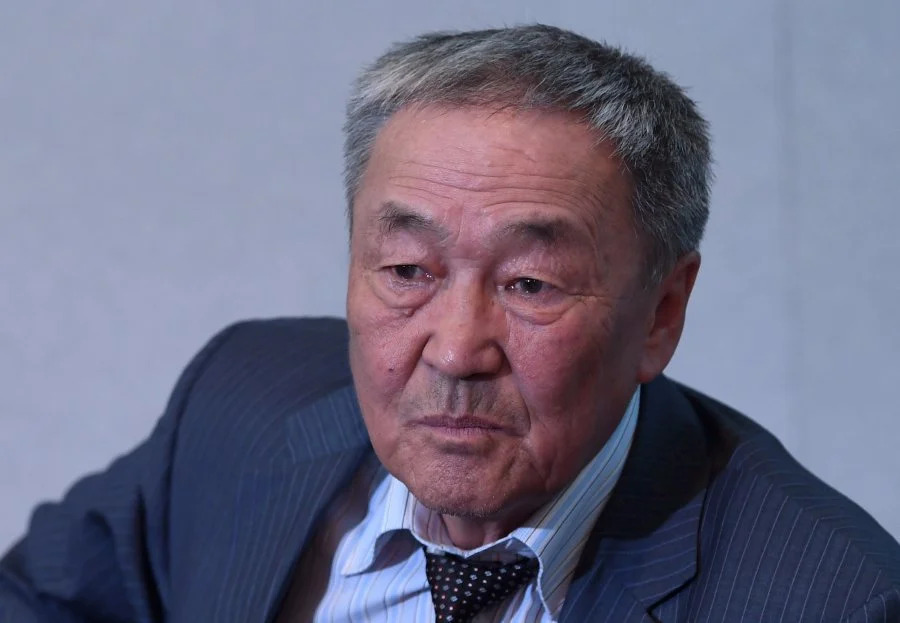
The Mongolian national was responding to the Court of Appeal’s decision to fully discharge the government from liability and to reduce the damages awarded to Altantuya’s family from RM5 million to about RM1.4 million.
Setev stressed that his long legal pursuit has never been about compensation, but about accountability and acknowledgement.
“I am just a person who has been looking for justice for the past 20 years. I am only looking for a sincere apology, one word. I am holding on to the hope that one day, after 20 years, I will hear an apology for admitting the unlawful wrongdoing,” he said.
He added that the apology should not come from ordinary Malaysians, but must be an official one extended to the Mongolian government and people. Setev said he intends to appeal the ruling that cleared the government.
Earlier, a three-judge Court of Appeal panel led by Chief Judge of Malaya Hashim Hamzah allowed the government’s appeal against the Shah Alam High Court’s 2022 decision. Reading the ruling, Justice K Muniandy said there was no evidence that Azilah or another former police officer, Sirul Azhar Umar, were acting under government instructions when Altantuya was killed.
“Murder is the antithesis of the duty to protect life and make peace. It is an act so far removed from the authorised duty of a police officer that it severs the connection between the employer and the employee,” he said.
The court found that the murder was carried out pursuant to a private arrangement and that the officers were not acting in the course of their official duties, meaning the government could not be held vicariously liable under Section 5 of the Government Proceedings Act.
Altantuya was murdered in October 2006, with her remains destroyed using military-grade explosives. Azilah and Sirul were convicted in April 2009 and sentenced to death.
Azilah remains in prison, but his death sentence was commuted in October 2023 to 40 years’ imprisonment and 12 strokes of the rotan. In an affidavit, he claimed that he had received orders from “high-ranking government officials” to “eliminate and dispose of” Altantuya, leading her family to seek a judicial review to compel authorities to complete investigations into the claim.
Meanwhile, Altantuya’s family said it will apply for leave to appeal to the Federal Court, challenging the Court of Appeal’s decision absolving the government of responsibility.
Family lawyer Sangeet Kaur Deo said there were legal issues that needed to be addressed by the apex court, particularly whether an employer can be held vicariously liable for the illegal acts of its employees.
“This is certainly one area that I think will need to be revisited. For the time being, I think we are going to apply for leave to the Federal Court,” she said during a press conference via Zoom.
She explained that the ruling effectively absolved the government of any responsibility for the actions of Azilah and Sirul, as their conduct was found not to be closely connected to their roles as police officers. She added that the decision also affirmed the involvement of former political analyst Abdul Razak Baginda in Altantuya’s murder.
The Court of Appeal upheld liability against Azilah, Sirul and Abdul Razak, but reduced the damages awarded to Altantuya’s family from RM5 million to RM1.38 million after finding that the High Court had erred in law in awarding the original sum.
Altantuya’s parents and grandson filed a RM100 million lawsuit in June 2007, citing mental shock and psychological trauma. The Shah Alam High Court allowed the suit in December 2022, ordering Azilah, Sirul, Abdul Razak and the government to jointly pay RM5 million, prompting appeals by the government and Abdul Razak.
Sirul has been in Australia for years, as the country does not extradite or deport individuals who face the death penalty.