

Rejecting suggestions that the project had been halted under the PH administration.
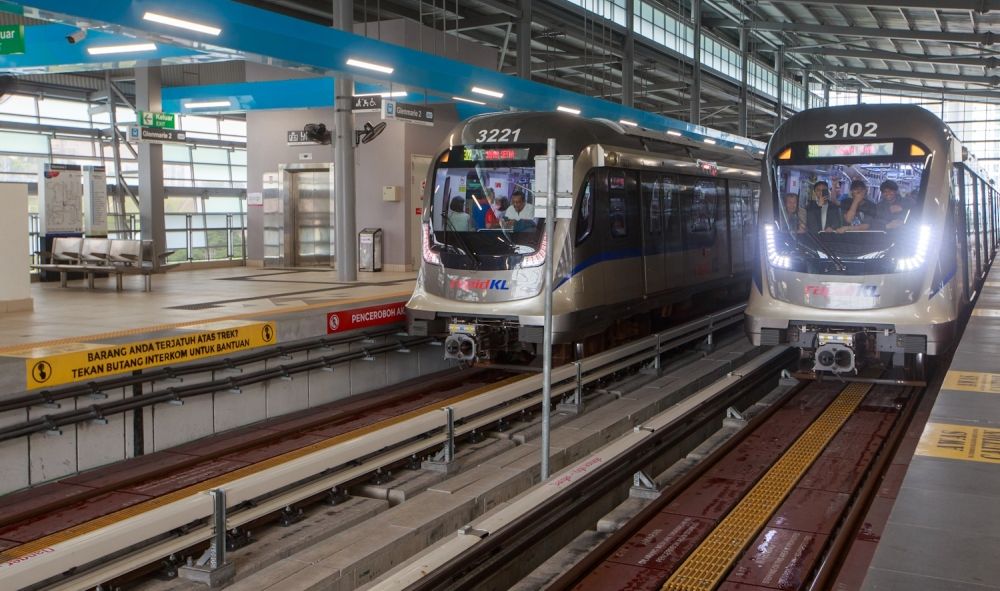
Former finance minister Lim Guan Eng and former Damansara MP Tony Pua have defended Pakatan Harapan’s overhaul of the LRT3 project, insisting it delivered substantial savings to Malaysian taxpayers while ensuring the rail line’s functionality.
In a joint statement responding to remarks by the Sultan of Selangor, Sultan Sharafuddin Idris Shah, the pair rejected suggestions that the project had been halted under the PH administration.
“The LRT3 project was never stopped, stalled or suspended during the PH administration between 2018 and 2020,” they said. They added that the government at the time regarded the project as “critical and essential” to improving the daily lives of Klang Valley residents.
The previous Barisan Nasional administration approved RM9 billion for the project in 2015. However, by March 2018, Prasarana had awarded work package contracts worth RM15.2 billion. Accounting for land acquisition, consultancy fees, project delivery partner fees and financing costs, Prasarana had sought a revised budget of RM31.65 billion together with an additional RM22 billion government guarantee.
With the project only about 9 per cent complete in mid-2018, the PH administration appointed independent engineering consultants to review the scheme and recommend cost-rationalisation measures. It continued construction while working with the Project Delivery Partner, MRCB-George Kent.
“The Cabinet approved the cost revision downwards by 47 per cent from RM31.65 billion to RM16.63 billion, a savings of RM15.02 billion,” they said.
The government reduced the number of train sets ordered, deferred the construction of five stations with initially low projected ridership (while making provisions for them to be built later), and extended the project’s completion target from 2020 to 2024 to avoid acceleration costs.
The five deferred stations were later reinstated under a RM5.3 billion second-phase contract covering the stations, additional trains and other upgrades. This brought the project’s total cost to RM21.93 billion.
“That is still RM9.72 billion less than the original approved cost of RM31.65 billion,” Lim and Pua stated.
They also defended the abolition of the Project Delivery Partner (PDP) model, which they argued created a perverse incentive for contractors because their fees were tied to the overall value of the project. It was replaced with a fixed-price contract to ensure no cost overruns.
According to the pair, these changes kept the final cost at RM21.93 billion while the lower debt burden is expected to save the government up to RM10 billion in interest costs over the next 25 to 30 years.
“The LRT3 project has now been successfully completed… enabling upfront project cost savings in excess of RM9.72 billion for Malaysian taxpayers,” they said.
The pair stressed that the savings did not come “at the expense of LRT passenger volume and functionality”. Instead, the rationalisation allowed funds to be redirected towards welfare programmes and development spending.
“We would like to reiterate the fact that these savings to the government were not at the expense of the LRT passenger volume and functionality. These savings in turn allowed the current and future governments to reallocate funds to other welfare benefits for the rakyat and development expenditure,” they added.
Lim and Pua expressed gratitude to Sultan Sharafuddin for highlighting the project’s importance in reducing traffic congestion, shortening travel times, and spurring economic development in Selangor.
The statement follows the Sultan’s comments crediting former prime minister Datuk Seri Najib Razak for approving the project in 2015 after a request from the Ruler, and praising Prime Minister Datuk Seri Anwar Ibrahim for continuing it and reinstating the five stations. Sultan Sharafuddin cautioned against any single party claiming sole credit, noting the project resulted from planning and cooperation across multiple administrations.