

PKR to be wiped out.
Having warned about two weeks ago that Barisan Nasional alliance will “go solo”, will contest all 56 seats in the next Johor state election, and will leave no space for cooperation or negotiation with Premier Anwar Ibrahim’s coalition called Pakatan Harapan, Johor Chief Minister Onn Hafiz Ghazi finally announced the dissolution of the Johor state legislative assembly on June 1, 2026.
A public holiday did not stop the United Malays National Organisation (UMNO) from seeking the consent of Johor Regent Tunku Ismail Sultan Ibrahim on the morning of June 1 to pave the way for the state’s 16th state elections. Onn Hafiz said the dissolution would allow the people of Johor to elect a new state government and obtain a fresh mandate to continue the state’s development agenda.
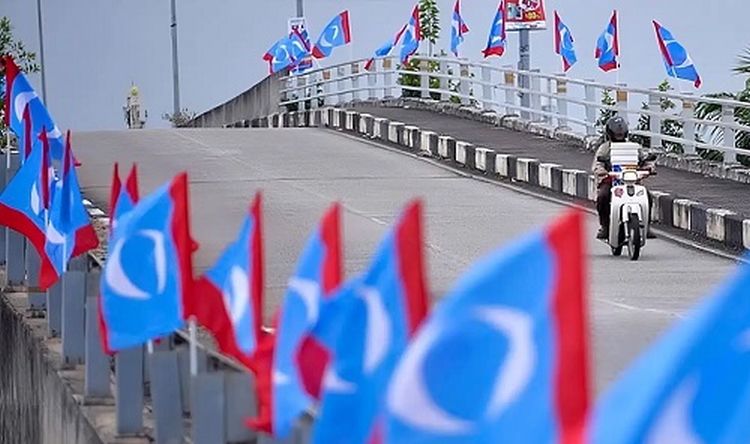 Now that the state assembly has been dissolved, the election must be called within 60 days at the discretion of the Election Commission. This means the 16th Johor state polls have to be held by July 31. Johor’s state election is only due by mid-2027, while Melaka’s is due by early 2027. But the fact that UMNO-led Barisan Nasional has decided to call for Johor polls ahead of Melaka polls shows UMNO’s confidence.
There are 56 seats in Johor state assembly, with 40 (two-thirds majority) currently held by Barisan Nasional (BN), 12 by the Pakatan Harapan (PH) pact led by Prime Minister Anwar Ibrahim, three by Perikatan Nasional (PN) and one by Malaysian United Democratic Alliance. Although BN is aligned with PH at the federal level, they are rivals at the state level in Johor and Melaka.
Following Onn Hafiz’s announcement, PH Johor claimed that it had anticipated that BN would dissolve the state assembly. Yet, at the same time, Anwar-led PH also complained that a one-day special assembly sitting that BN had recently announced for June 22 was “completely nonsensical”. The burning question is why Johor UMNO has moved forward the date from June 22 to June 1.
Call UMNO a traitor, backstabber, opportunistic, untrustworthy or whatever you like, but the Malay nationalist political party is playing a clever game compared to all its rivals, including Anwar-led Pakatan Harapan, which is made up of Anwar’s Parti Keadilan Rakyat (PKR or People’s Justice Party), the Democratic Action Party (DAP), and Parti Amanah Negara (Amanah).
Not only is PN still in turmoil with its coalition partners having disagreements and attacking each other, but the PH is facing internal issues. While PN’s biggest coalition parties – PAS and Parti Pribumi Bersatu Malaysia (Bersatu) – are having an increasingly public spat, which is pushing their relationship to the brink, PH’s popularity is plunging thanks to PM Anwar.
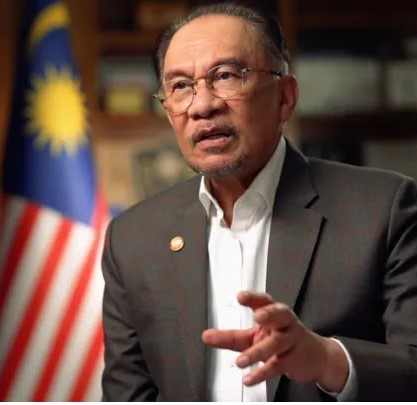 Anwar’s PKR is incredibly weak in Johor, whilst DAP is fast losing the support of 95% Chinese voters it previously enjoyed. Four years ago (2022), DAP won only 10 seats, down from 14 previously. Anwar’s PKR and Amanah won only one seat each, down from seven seats and six seats, respectively. In the historic May 2018 General Election, Mahathir stunningly led PH to topple BN for the first time in history.
Worse, DAP has come under fire recently after it emerged that state assemblyman for the Skudai constituency – Marina Ibrahim – was asked by Johor DAP chairman Teo Nie Ching to contest in a different seat (Tiram) currently held by BN in the next elections, and that she would be offered chairmanship of a statutory body or GLC even if she lost.
 Marina has since announced that she would not be contesting in the next polls and will be retiring from politics, but the issue has sparked anger from PH supporters who are of the view that incumbents should be given priority to defend their constituencies. DAP is also accused of hypocrisy as it used to strongly oppose politicians and unqualified individuals taking up chairmanships in Government-Linked Companies (GLCs).
Adding salt to the wound is the newly launched Parti Bersama Malaysia (Bersama) or Malaysian United Party (MU) – led by former PKR deputy president Rafizi Ramli and his comrade Nik Nazmi. Rafizi calls his move a kamikaze mission, but Bersama is actually targeting PKR’s traditional multiracial and reformist base to chip away at supporters who feel the Anwar government has strayed from its original reform agenda.
Several regional PKR leaders and local members have already announced their immediate departure to align with Bersama, leaving PKR “wounded” ahead of future elections. At least 10 PKR MPs aligned to Rafizi are waiting for the “right time” to join MU due to the RM10 million bond stopping them from defecting. Bersama or MU is also one of the reasons why Johor UMNO decided to fast-forward its state polls.
Even though PKR is trying very hard to put up a brave face, pretending it is not afraid of either UMNO or Bersama, in reality, both PH and BN are concerned about the new kid on the block. Besides his capacity to strategise and execute campaigns within a short period of time, Rafizi brings rich experience in data analysis, social media machinery and communication platforms that channel tailored content to targeted voters.
Before Bersama could consolidate its support base and grow its membership organically, Johor Chief Minister Onn Hafiz decisively moved forward with an earlier plan to dissolve the Johor state legislative assembly from June 22 to June 1. The difference of three weeks might sound insignificant, but it is enough for Rafizi to do tonnes of harm, especially in fielding candidates in Johor just to test the water.
MU’s appeal is to new, undecided voters. But it is also an alternative choice to disgruntled voters in BN, PH, and PN camps. Malaysia’s recent elections have each been shaped by multi-cornered contests and splits in the Malay vote, in which younger, less partisan voters could swing the outcome. Splitting the urban vote in PH strongholds does not guarantee victories for Bersama, but it surely will give PKR a run for its money.
If the Sabah state election in Nov 2025 is any indicator, it’s not an exaggeration to suggest that Anwar’s PKR is set to be wiped out in Johor too. In 2022, out of the 20 seats they contested, the party managed to secure only the Bukit Batu constituency, won by their candidate Arthur Chiong Sen Sern. That’s a success rate of only 5%. Even then, Arthur won with a razor-thin majority of only “137 votes”.
PKR can talk big till the kingdom comes, even fantasising about PH retaking the Johor states like in 2018. But the fact remains that, unlike in 2018, there isn’t any 1MDB scandal that had mobilised Chinese voters or the 6% Goods and Services Tax (GST), an unpopular tax that had angered Malay voters. And unlike Mahathir – seen as saviour in 2018 – who managed to unite Malay, Chinese and Indians in an anti-Najib movement, Anwar today is seen as a con artist.
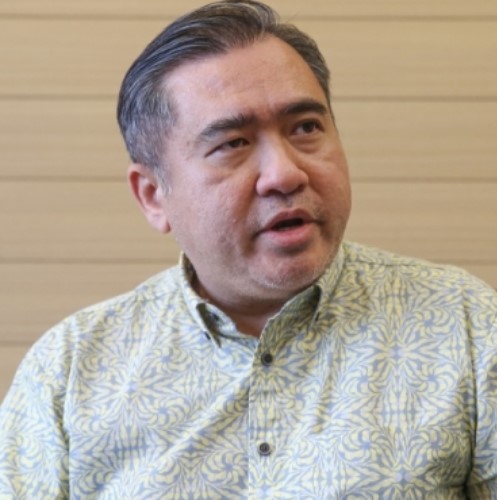 Heck, even DAP under the weak and cowardly leadership of Anthony Loke Siew Fook could be annihilated in Johor. Out of the 10 seats the party had secured in 2022, a staggering seven seats are considered marginal, with percentage votes ranging from 40% to 53.67%. Two seats are fairly safe – Mengkibol (57.5% votes) and Skudai (58.53% votes). There is only one safe seat in Bentayan, won with 64.53% votes.
In comparison, BN has at least nine safe seats with more than 60% votes secured in 2022. With four fairly safe seats and 27 other marginal seats, it’s not hard to understand why UMNO is calling for an early poll at a time when Anwar is leading PH to oblivion. If the Chinese voters stay at home or vote Bersama to teach PKR and DAP a lesson, it would be game over for PH in Johor.
With intensifying PKR-Bersama rivalry and a potential Bersatu-PAS fallout, Johoreans may see UMNO as a “stabilising force”, not to mention that, unlike other states, Johor is UMNO’s birthplace and still its bastion, enjoying voter goodwill compared to other states. Additionally, state elections usually see lower voter turnout, particularly among minority groups, which would benefit incumbents.
Crucially, UMNO is betting that Anwar Ibrahim – highly intoxicated with power – does not have the balls to dissolve the Parliament for a general election. Caught with his pants down, the Prime Minister would not make it even if he wanted to. Anwar would consider calling snap polls only after the tabling and passing of the upcoming national budget in October, where he could dish out candies to fish for votes.
UMNO knew that combining state and general elections could weaken its chances, as Pakatan Harapan voters were likely to “come out in full force” for parliamentary seat contests. It still remembers how BN did really well in the March 2022 state election but underperformed in the general election later that year (November 2022) – another reason why Onn Hafiz rushed to call for Johor polls.
An early call for elections could also give UMNO a strategic advantage, as voters would focus more on local issues rather than anger towards the federal government. With a historic RM110 billion in total approved investments – positioning Johor as the top investment destination in Malaysia – Johor UMNO is also cleverly banking on the economic achievements to win the elections.
In the same breath, UMNO wanted to test whether DAP would chicken out following DAP secretary general Anthony Loke’s bold threat – “If Johor assembly is dissolved, we will dissolve Negeri Sembilan state assembly tomorrow”. Loke would be under pressure to convince Anwar to similarly mirror Johor’s political move, failing which would subject DAP to humiliation for its empty threat.
Likewise, it would also test whether PM Anwar too would chicken out or make good on his warnings and threats – made during his fiery speech at the Pakatan Harapan Convention 2026 in Johor Bahru after UMNO announced its decision to contest all 56 seats – that if unity pacts are compromised, he would not hesitate to return the mandate to the people.
Over the past three years, Anwar – through his own self-inflicting policies such as racism and hate politics – has faced criticism from both within and outside his coalition for failing to deliver the meaningful reforms promised to the people. But even on bread-and-butter issues, the odds are stacked against Pakatan Harapan over the escalating cost of living. Even fuel subsidies may suffer a cut if scammer Anwar is given another term. – Finance Twitter